TARGETED STRETCHING EXERCISE/STRETCHING AFTER A MASSAGE
- fullcircle110
- Apr 10
- 9 min read

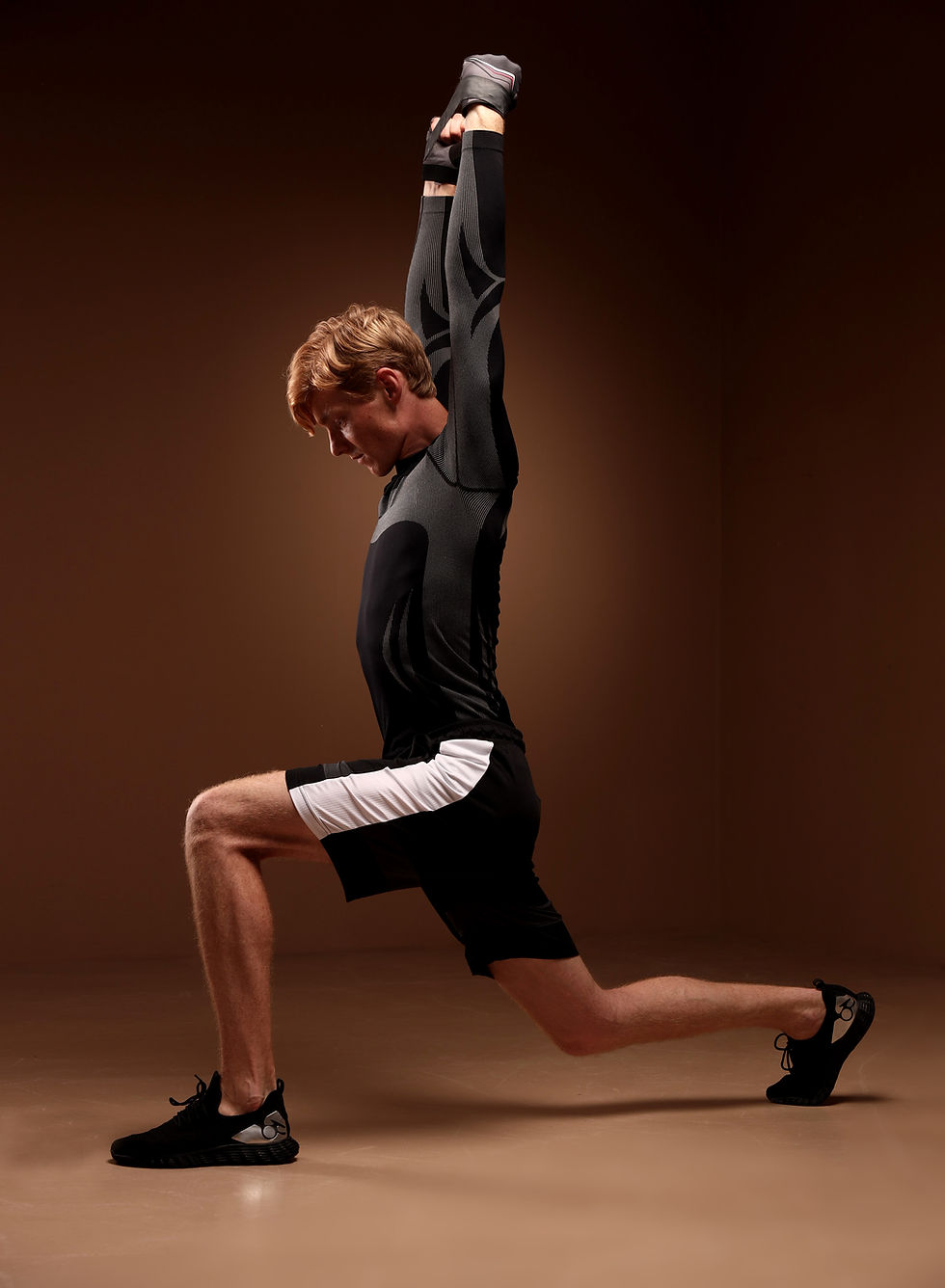
Even on an "inactive" day, our bodies are constantly engaged in movement, posture maintenance, and repetitive tasks. This means certain muscle groups are almost always in use, or conversely, held in shortened positions, leading to tightness. Regularly stretching these often-used muscles is crucial for preventing discomfort, improving posture, and maintaining overall mobility. Here are some of the muscle groups most commonly used throughout the day, whether active or inactive, along with stretches to target them:
Hip Flexors (Psoas, Iliacus, Rectus Femoris)
Why they're used often: These muscles are constantly engaged in lifting your legs (e.g., walking, climbing stairs) and become particularly tight from prolonged sitting (as they are in a shortened position).
Impact of tightness: Tight hip flexors can pull on the lower back, leading to lower back pain, poor posture, and inhibited glute activation.
Targeted Stretch: Kneeling Hip Flexor Stretch
How to do it: Kneel on one knee (e.g., right knee) with the other foot flat on the floor in front of you (left foot). Ensure your front knee is directly above your ankle. Gently push your hips forward until you feel a stretch in the front of the hip and thigh of your kneeling leg. Keep your torso upright and avoid arching your lower back.
Hold: 20-30 seconds per side, repeat 2-3 times.
Hamstrings (Biceps Femoris, Semitendinosus, Semimembranosus)
Why they're used often: These muscles are used in walking, running, and bending the knee. They also tend to become tight from prolonged sitting or standing, especially when combined with tight hip flexors.
Impact of tightness: Tight hamstrings can contribute to lower back pain, limit bending over, and affect gait.
Targeted Stretch: Seated Hamstring Stretch
How to do it: Sit on the floor with one leg extended straight in front of you. Bend the other knee and place the sole of that foot on the inner thigh of your extended leg. Keeping your back straight, gently lean forward from your hips, reaching towards your extended foot until you feel a stretch along the back of your thigh.
Hold: 20-30 seconds per side, repeat 2-3 times.
Alternative: Standing Hamstring Stretch
How to do it: Place one heel on an elevated surface (like a chair or step) with your leg straight but not locked. Keeping your back straight, gently lean forward from your hips until you feel a stretch in the back of your thigh.
Quadriceps (Rectus Femoris, Vastus Lateralis, Vastus Medialis, Vastus Intermedius)
Why they're used often: These muscles are heavily used in standing, walking, climbing stairs, and any activity involving knee extension.
They can also get tight from repetitive leg movements or prolonged periods of knee flexion (sitting).
Impact of tightness: Tight quads can pull on the kneecap, leading to knee pain, and can also contribute to lower back issues.
Targeted Stretch: Standing Quad Stretch
How to do it: Stand tall, holding onto a wall or chair for balance if needed. Bend one knee and grasp your ankle or foot with the hand on the same side. Gently pull your heel towards your glute, feeling the stretch in the front of your thigh. Keep your knees together and avoid arching your back.
Hold: 20-30 seconds per side, repeat 2-3 times. Glutes (Gluteus Maximus, Medius, Minimus)
Why they're used often: These large muscles are crucial for standing, walking, climbing, and hip extension. They can become inactive or "sleepy" from prolonged sitting, leading to weakness, but also tight from overuse or compensating for other weak muscles. Impact of tightness/weakness: Can lead to lower back pain, knee pain, and hip discomfort.
Targeted Stretch: Figure-Four Stretch (Supine or Seated) a. How to do it (Supine): Lie on your back with knees bent and feet flat on the floor. Cross one ankle over the opposite knee. Gently pull the bottom knee towards your chest until you feel a stretch in the glute of the crossed leg.
How to do it (Seated): Sit in a chair. Cross one ankle over the opposite knee. Lean forward gently, keeping your back straight, until you feel the stretch in the glute of the crossed leg.
Hold: 20-30 seconds per side, repeat 2-3 times.
Pectorals (Pectoralis Major, Pectoralis Minor)
Why they're used often: These chest muscles are active in pushing movements and contribute to arm movement. Crucially, they become extremely tight from prolonged computer use, driving, or looking at phones, causing a rounded shoulder posture. Impact of tightness: Leads to rounded shoulders, hunched posture, upper back pain, and limited shoulder mobility.
Targeted Stretch: Doorway Chest Stretch a. How to do it: Stand in a doorway. Place your forearms on each side of the door frame with your elbows bent at 90 degrees, slightly above shoulder height. Gently step forward with one foot through the doorway until you feel a stretch across your chest.
Hold: 20-30 seconds, repeat 2-3 times.
Neck Muscles (Sternocleidomastoid, Trapezius - upper part, Levator Scapulae)
Why they're used often: These muscles are constantly working to hold up your head (which weighs a surprising amount!), especially with prolonged screen time ("tech neck"). They also get tight from stress and poor sleeping positions.
Impact of tightness: Causes neck pain, headaches, restricted head movement, and shoulder tension.
Targeted Stretch: Neck Lateral Flexion Stretch
How to do it: Sit or stand tall. Gently tilt your head towards one shoulder, aiming to bring your ear closer to your shoulder. Use your hand on the same side to gently apply slight pressure for a deeper stretch. Feel the stretch on the opposite side of your neck. Hold: 20-30 seconds per side, repeat 2-3 times.
Targeted Stretch: Neck Extension/Flexion
How to do it: Gently drop your chin towards your chest to stretch the back of your neck. Then gently tilt your head back to look up and stretch the front of your neck.
Upper Trapezius and Levator Scapulae (Shoulder/Upper Back)
Why they're used often: These muscles elevate and rotate the shoulder blades and shrug the shoulders. They are notorious for holding stress and tension, especially from desk work or carrying heavy bags.
Impact of tightness: Causes knots in the shoulders, shoulder pain, neck pain, and tension headaches.
Targeted Stretch: Upper Trapezius Stretch
How to do it: Sit or stand with good posture. Drop one ear towards your shoulder. To deepen the stretch, you can gently place the hand on the same side on top of your head, applying very light pressure. Alternatively, place the opposite hand behind your back or grip the bottom of your chair to anchor the shoulder down.
Hold: 20-30 seconds per side, repeat 2-3 times.
Calves (Gastrocnemius, Soleus)
Why they're used often: These muscles are engaged with every step you take, standing, and any ankle movement. Prolonged standing, wearing high heels, or repetitive impact activities can cause tightness.
Impact of tightness: Can lead to Achilles tendon issues, plantar fasciitis (heel pain), and limit ankle flexibility.
Targeted Stretch: Standing Calf Stretch (Gastrocnemius focus)
How to do it: Stand facing a wall, placing your hands on it for support. Step one leg back, keeping it straight and the heel on the floor. Lean forward into the front knee until you feel a stretch in the back of your straight calf.
Hold: 20-30 seconds per side, repeat 2-3 times.
Targeted Stretch: Bent-Knee Calf Stretch (Soleus focus)
How to do it: From the same standing position against a wall, keep the back leg slightly bent at the knee, with the heel still on the floor. Lean into the stretch.
Forearms and Wrists (Flexors and Extensors)
Why they're used often: These muscles are constantly active in typing, writing, gripping objects, driving, and using phones. Repetitive strain is common.
Impact of tightness: Can lead to carpal tunnel syndrome, tennis elbow, golfer's elbow, and general wrist/hand pain.
Targeted Stretch: Wrist Extensor Stretch
How to do it: Extend one arm straight out in front of you, palm down. With your other hand, gently pull your fingers downwards towards your body until you feel a stretch along the top of your forearm.
Hold: 20-30 seconds per side, repeat 2-3 times.
Targeted Stretch: Wrist Flexor Stretch
How to do it: Extend one arm straight out in front of you, palm up. With your other hand, gently pull your fingers downwards towards your body until you feel a stretch along the underside of your forearm.
Hold: 20-30 seconds per side, repeat 2-3 times. 10. Spinal Erectors
(Erector Spinae Group) and Core Muscles (Transverse Abdominis, Obliques)
Why they're used often: The spinal erectors run along your spine and keep you upright. Your core muscles stabilize your trunk for almost all movements. Both are constantly working to maintain posture, whether sitting or standing.
Impact of tightness/weakness: Lower back pain, poor posture, instability.
Targeted Stretch: Cat-Cow Stretch (for spinal mobility)
How to do it: Start on all fours (hands and knees). As you inhale, arch your back, drop your belly towards the floor, and lift your head (Cow pose). As you exhale, round your spine towards the ceiling, tuck your chin to your chest, and pull your navel towards your spine (Cat pose).
Repetitions: 5-10 repetitions, flowing with your breath.
Targeted Stretch: Child's Pose (for gentle lower back release)
How to do it: Kneel on the floor, big toes touching. Spread your knees wide (or keep them together). Sit your hips back towards your heels and walk your hands forward, resting your forehead on the floor.
Hold: 30 seconds to 1 minute, breathing deeply.
The importance of stretching after a massage.
Reinforces Muscle Lengthening: Massage encourages tight muscles to release and lengthen. Stretching immediately after helps to solidify and maintain this new, increased muscle length.
Prevents Muscle Shortening Reversal: Without stretching, muscles tend to revert to their pre-massage shortened state more quickly. Stretching acts as a "setting" mechanism.
Enhances Post-Massage Flexibility: The muscles are already pliable from the massage; stretching capitalizes on this state to achieve greater gains in overall flexibility.
Deepens Range of Motion (ROM) Gains: Increased muscle flexibility directly translates to a greater range of of motion in associated joints, improving functional movement. Improves Joint Mobility: By lengthening the muscles around joints, stretching reduces restriction and allows for smoother, less inhibited joint movement.
Boosts Blood Circulation Continuation: Massage stimulates blood flow; gentle stretching sustains and further enhances this circulation, bringing more oxygen and nutrients to tissues.
Facilitates Waste Product Removal: Enhanced circulation from stretching helps to more effectively flush out metabolic by products (like lactic acid) from the muscles.
Reduces Post-Massage Soreness: By promoting continued circulation and release of residual tension, stretching can minimize the mild soreness sometimes experienced after deep tissue work.
Alleviates Muscle Stiffness: Stretching helps prevent muscles from feeling stiff or rigid, especially after a deep massage that might leave them feeling worked.
Optimizes Muscle Recovery: Improved blood flow and waste removal contribute to faster and more efficient muscle recovery from the physical stress of the massage itself. Balances Muscle Tone: Stretching helps to bring hypertonic (overly tense) muscles back to a more balanced and relaxed resting tone.
Corrects Muscle Imbalances: If certain muscles were chronically tight and shortened, stretching helps to restore balance with their opposing muscle groups.
Improves Postural Alignment: By releasing tightness and promoting balanced muscle length, stretching aids in maintaining the improved body alignment achieved during massage.
Enhances Body Awareness (Proprioception): Stretching engages sensory receptors in muscles and joints, sharpening your perception of your body's position and movement. Deepens Relaxation Response: Both massage and stretching stimulate the parasympathetic nervous system, leading to a more profound and sustained state of relaxation.
Reduces Stress and Anxiety: The combined effect of physical release and nervous system calming from massage and stretching contributes significantly to stress reduction.
Decreases Muscle Tension Headaches: Releasing tension in the neck and shoulders through massage and subsequent stretching can alleviate tension-type headaches. Prepares Muscles for Activity: If you plan any physical activity later, stretching after a massage ensures your muscles are optimally flexible and less prone to injury. Minimizes Risk of Injury (Acute): Flexible, well-oxygenated muscles are less susceptible to sudden strains or tears during unexpected movements.
Reduces Risk of Chronic Overuse Injuries: By maintaining balanced muscle length and function, stretching helps prevent the chronic tightening that often leads to overuse injuries.
Enhances Athletic Performance: Improved flexibility and range of motion are crucial for optimal athletic performance in various sports and activities.
Promotes Neuromuscular Efficiency: Stretching can improve the communication between your brain and muscles, leading to more coordinated and efficient movements.
Supports Lymphatic Drainage: Gentle movement and muscle contraction during stretching can aid the lymphatic system in draining fluids and toxins.
Extends the Benefits of the Massage Session: Stretching actively helps to "lock in" and prolong the therapeutic effects you paid for and experienced during the massage. Cultivates Mind-Body Connection: The focused attention required during stretching deepens your awareness of your physical self, fostering a stronger mind-body connection.
Empowers Self-Care: Engaging in post-massage stretching gives you an active role in your own well-being and maintenance, fostering healthy habits.
Improves Sleep Quality: A relaxed body and mind, achieved through massage and stretching, are more conducive to falling asleep easily and enjoying deeper, more restorative sleep.
Increases General Comfort: Reduced muscle tension and improved flexibility simply make daily life feel more comfortable, with less aches and pains.
Teaches Proper Stretching Techniques: A massage therapist can often guide you on appropriate post-massage stretches, educating you on safe and effective methods.
Maximizes Long-Term Musculoskeletal Health: Regular massage and stretching contribute significantly to maintaining healthy muscles, joints, and overall musculoskeletal function throughout life


Comments